
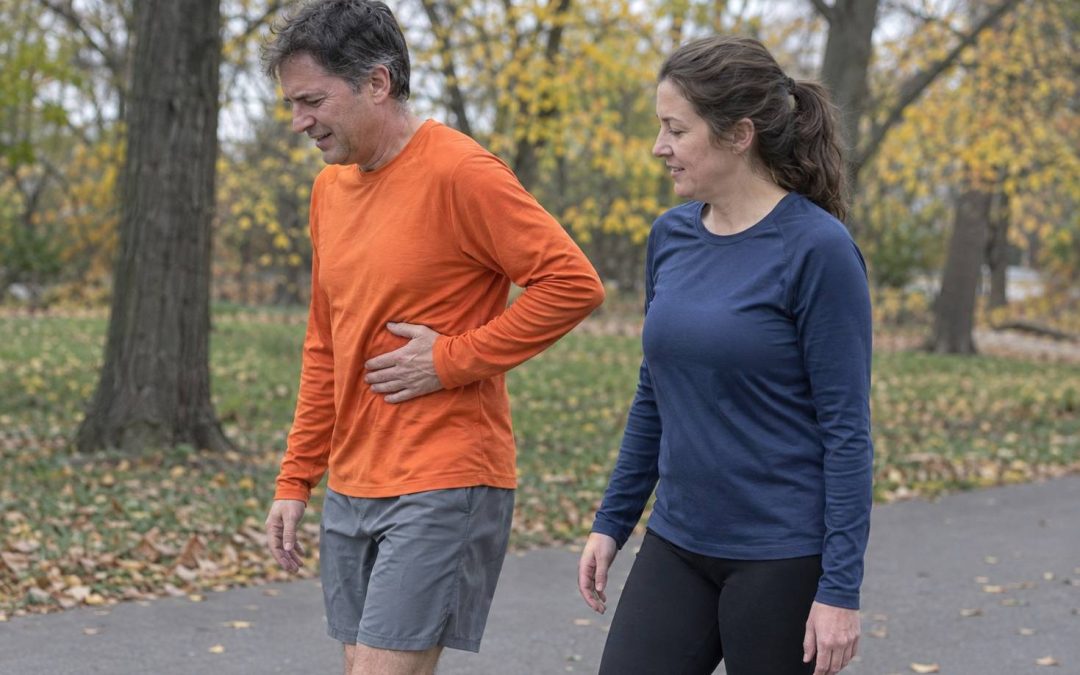
A stitch can feel like something has gone wrong inside you. Usually it hasn’t.
That sharp pain under the edge of your ribs is common and mostly harmless. It passes, and stopping is the most reliable way to end it.
The clearest link is to what you ate or drank before the run. A big meal an hour or two beforehand, or a glass of juice, makes one more likely.
Fitness has less to do with it than most beginners fear.
What a stitch actually is
Researchers call it exercise-related transient abdominal pain, which simply means a passing belly pain brought on by exercise.
Australian researchers Darren Morton and Robin Callister have studied it for years. Their 2015 review in Sports Medicine describes it like this:
- It usually sits on one side of the middle of the belly, along the lower edge of the ribs.
- It feels sharp or stabbing when it is bad, and more like a cramp or an ache when it is mild.
- It sometimes comes with a pain at the tip of the shoulder.
- It is most common in sports that move the upper body over and over while it is held upright, like running and horse riding.
Nobody has fully proven what causes it. The review’s best explanation is irritation of the thin lining on the inside of the belly wall, though it says more research is needed.
How common it is
The same review reports that about 7 in 10 runners get a stitch at least once a year. In a single race, roughly 1 in 5 people get one.
A study at Sydney’s City to Surf, a 14 km (about 8.7 mile) community run, asked 848 people about it at the finish. Among the runners, 30 percent had a stitch during the event, against 16 percent of the walkers.
Stitches were less common in older participants. They had nothing to do with gender, body mass index (weight for height) or finishing time.
Fast runners get them too. A stitch is not a sign that you are too unfit to be out there.
The clearest link: what you ate and when
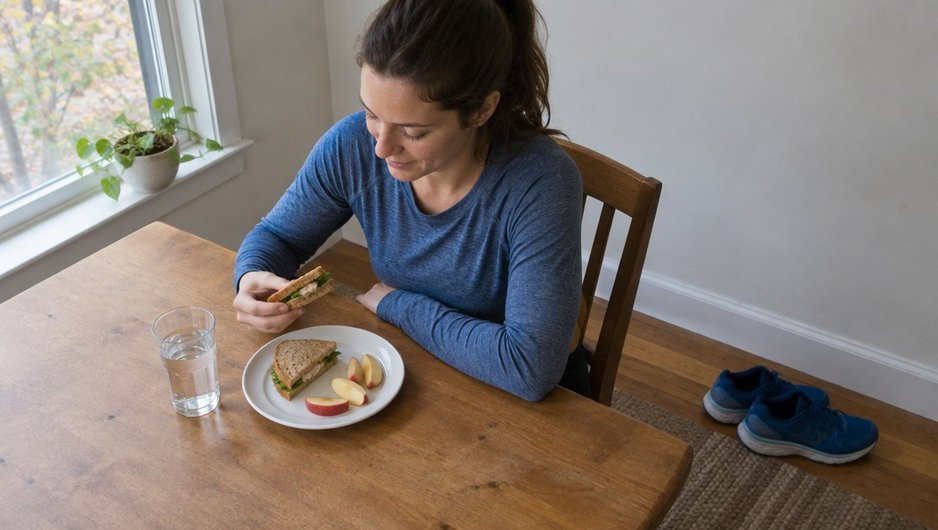
In the City to Surf study, some runners ate a large amount of food in the one to two hours before the start. Runners who ate a big meal in that window were more likely to get a stitch.
What the meal contained made no difference.
Drinks matter as well. In one lab trial described in the review, fruit juice brought on stitches more than water or a sports drink did. Water and the sports drink were no different from each other.
Say you eat a full lunch at noon and head out for a run at 1 p.m. That is exactly the window the race study pointed to.
The simplest test is to change one thing at a time:
- Make the meal before a run smaller.
- Leave at least two hours between a big meal and the run, which the review lists as a common prevention step.
- Save the juice for after the run.
The usual advice on what to eat before a run points the same way: something light and familiar, with time to settle.
Posture may play a part
The same research team ran a study of 104 men and 55 women, all active young adults. People with a rounded upper back were more likely to get stitches. Body type made no difference at all.
That fits with the review’s other suggestions: better posture, a stronger core, or a broad supportive belt. All three rest mostly on anecdote and a few case reports rather than on trials.
You don’t need a posture program to act on this. Running tall and relaxed, with your shoulders loose, is good form anyway.
What to do when one hits
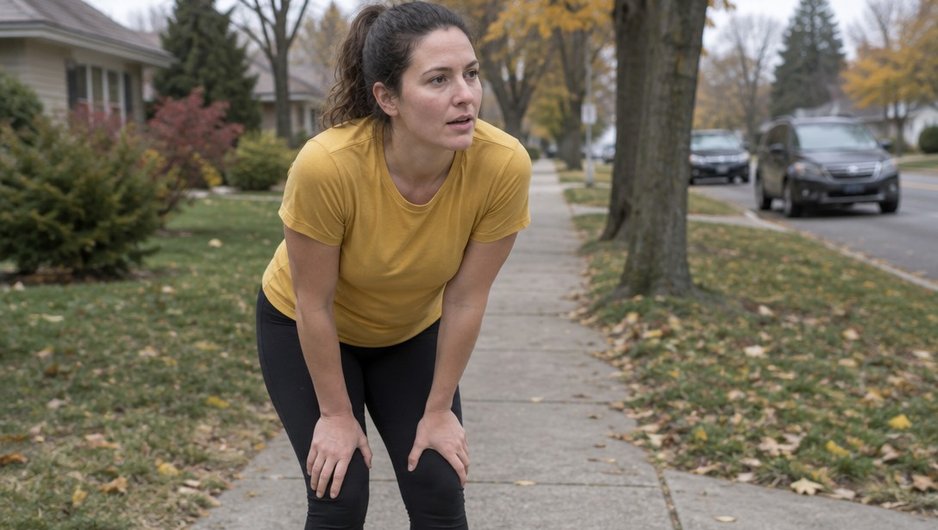
No relief technique has been proven to work better than the others. The review calls the evidence on this mixed.
What sufferers say they do, from a survey of almost 600 of them:
- Deep breathing (40 percent)
- Pushing on the sore spot (31 percent)
- Stretching that side (22 percent)
- Bending forward (18 percent)
Try one and see what works for you.
In one race study, about a third of people with a stitch had to slow down, and 6 percent stopped.
Slowing down is a reasonable choice, and so is a short walk until it eases.
When it isn’t a stitch
A stitch is a passing pain. A pain that stays after you stop is less typical of a stitch.
Stop for the day and see a doctor if any of these is true:
- The pain is still there after you’ve stopped and rested.
- It sits in your chest rather than your side.
- It comes with trouble breathing.
The next time a stitch shows up, note what you ate and drank and how long before the run. After a few of them, look for the pattern.