
Fueling a run does not require gels, powders, or a special plan, no matter what the supplement aisle implies.
For most everyday runs, eating for running is simpler than the marketing suggests.
The two things that actually matter are timing and your stomach. Get those right and food becomes one less thing to worry about.
Most fueling advice online is written for marathoners. For a 30 to 60 minute run, you can skip almost all of it.
Do You Even Need to Eat Before a Run?

For a short, easy run, often not. Plenty of people run comfortably first thing in the morning on an empty stomach.
If you feel weak, lightheaded, or distracted by hunger, eat a little.
There is no prize for running on empty if it makes you miserable.
Listen to your body and let it decide. Some runners need a snack, others do not.
What to Eat Before a Run
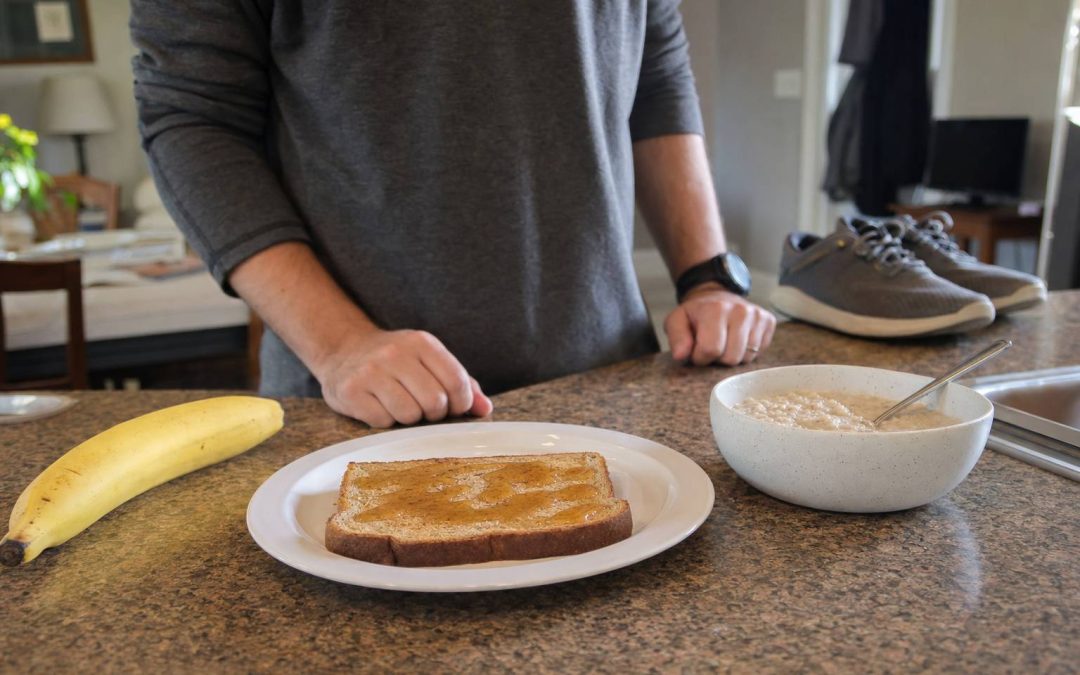
If you do eat first, keep it small and simple. Choose easy carbohydrates, and go light on fat and fiber.
Good pre-run options include:
- A banana
- A slice of toast with honey or jam
- A small bowl of oatmeal
- A handful of crackers
Timing matters as much as the food. A small snack 30 to 60 minutes before is usually fine, while a larger meal needs about 2 to 3 hours to settle.
Save the big, heavy, or greasy meals for after the run, not before.
Avoiding the Mid-Run Bathroom Emergency

Stomach trouble on the run is more common than people admit. That mile-from-home panic usually traces back to what and when you ate.
Surveys of endurance runners suggest up to one in three deal with it at times.
The cause is partly physical. During a run your body sends blood away from the gut toward your muscles, and the constant impact jostles everything.
A few habits cut the risk:
- Run on a fairly empty gut, and use the bathroom before you head out.
- Avoid high-fiber foods in the few hours before a run.
- Go easy on very fatty foods, which take longer to digest.
- If coffee stirs your stomach, skip it right before running.
If you ever see blood, or stomach problems last for weeks, see a doctor. That is worth checking rather than guessing.
What to Eat After a Run
After an easy run, you do not need anything special. Your next normal meal often does the job.
After a longer or harder effort, aim to eat within an hour or so. A mix of carbohydrates and a little protein helps you recover.
Simple options work well:
- Yogurt with fruit
- A glass of milk and a banana
- Eggs and toast
- A normal balanced meal
Pair it with fluids, since you lose water as you run.
What About Gels and Sports Drinks?
For runs under an hour, water and normal food are enough. You do not need energy gels or sports drinks for everyday training.
Gels are concentrated, and they can upset your stomach if you are not used to them. Save them for long races, and only after practicing with them first.
Keep It Simple
You do not need to track macros or buy sports nutrition to run a few times a week. Real, everyday food covers it.
Eat a little before if you need to, refuel with a balanced meal after, and notice what sits well in your stomach. Over time you will learn your own pattern.
If you are just getting started, your eating does not need to change much at all. A simple first-month plan and steady hydration on your runs matter far more than any pre-run snack.