

Do you actually have bad running form, or does it just feel that way when smoother runners glide past? For most beginners it is the second one.
Most running form advice does not matter much for a beginner.
A few simple things help. The rest is noise you can skip. Good form is mostly staying relaxed and not overstriding, not a checklist you have to ace before your next run.
You Probably Do Not Need to Fix Your Foot Strike

The internet loves to argue about foot strike. Heel, midfoot, forefoot, everyone has a camp.
For most beginners it matters far less than you would think. Forcing a new landing style usually creates more problems than it solves.
Reviews of running studies have found no strong evidence that one foot strike pattern prevents injury better than another.
So let your foot land where it wants to. Put your attention on the cues below instead.
The Cue That Matters Most: Shorter, Quicker Steps
If you change one thing, change your step length. Most beginners reach a foot way out in front of the body.
That is overstriding. It acts like a tiny brake on every step and sends more shock up the leg.
The fix is simple. Take slightly shorter, quicker steps and let your foot land under your hips.
A study in Medicine and Science in Sports and Exercise found that a quicker step rate lowered the load on runners’ knees and hips. You do not need to count anything.
Just think “light and quick” and let your feet turn over a little faster.
Look Ahead, Not Down
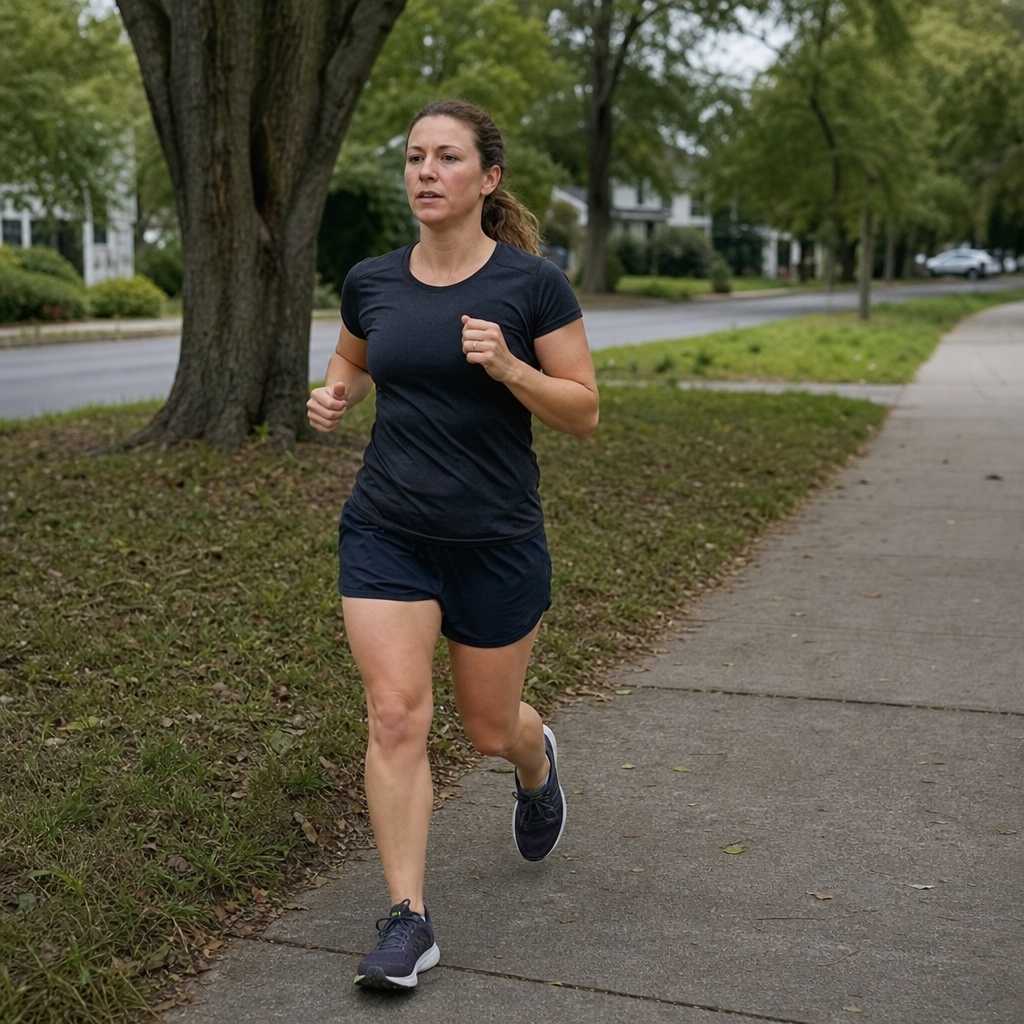
Where you look quietly sets your posture. A lot of beginners stare at their feet, which rounds the shoulders and drops the head.
Keep your eyes on the path 10 to 20 feet ahead. Your head follows your gaze, and a level head keeps the rest of you stacked up properly.
Stay Tall and Relaxed
Posture does the quiet work of good form. Run tall, as if a string is gently lifting the top of your head.
Keep your shoulders down and loose, not bunched up by your ears. Let your hands stay soft, like you are holding something you do not want to crush.
A slight forward lean helps, but it should come from your ankles, not your waist. Folding at the waist just nags your lower back.
Let Your Arms Set the Rhythm
Your arms are not along for the ride. They drive your cadence and keep you balanced.
Bend your elbows to about 90 degrees and swing them forward and back, not across your body. Swinging across wastes energy and twists your torso.
When your legs feel heavy late in a run, quicken your arms. The feet tend to follow.
Do Not Overthink Breathing
Breathing trips up a lot of beginners, and it really does not need to.
Breathe through your nose and mouth in whatever rhythm feels natural. If you cannot speak a full sentence, you are running too fast, not breathing wrong.
That is the same talk test again. Slow down until breathing feels easy.
Form Follows Fitness
Beginners often miss this point.
Good form is mostly a byproduct of getting fitter and staying relaxed.
As your muscles adapt, your stride smooths out on its own. You cannot force it by tensing up and concentrating hard.
Most beginner injuries come from doing too much too soon, not from imperfect form. A few habits that prevent common running injuries protect you more than any single technique cue.
A Simple Form Check
Run through this now and then, from the ground up:
- Feet landing under your hips, not out front
- Quick, light steps
- Tall, relaxed posture
- Shoulders down, hands soft
- Eyes on the path ahead
Where to Go From Here
Do not try to fix everything at once. Pick one cue for your next run and make it shorter, quicker steps.
Run relaxed, keep the effort easy, and let the rest sort itself out over weeks. If you are still finding your feet, a simple first-month plan matters far more than perfect form.