

In ordinary freezing weather, the cold on its own is rarely the problem for an easy run. A dry, still morning right at freezing can be one of the easier runs of the year.
What usually changes the answer is the wind, the footing and the light.
Check the wind chill, not just the thermometer. When exposed skin could freeze in half an hour, move the run indoors or cut it short. Above that line, a few small changes usually cover it.
Read the wind chill before you go
The big number in your weather app is the air temperature. The one to check as well usually sits just below it, labeled “feels like” or “wind chill”.
The National Weather Service, the US government’s weather forecasting agency, explains wind chill simply. It is how cold your skin feels once the wind pulls heat away from it.
It gives a worked example:
- Air temperature: 0°F
- Wind: 15 mph
- Wind chill: minus 19°F
- Time for exposed skin to freeze: 30 minutes
Thirty minutes is shorter than a lot of easy runs. At a minus 19°F wind chill, a cold run stops being a matter of comfort.
Two more details from the same page are useful. Wind chill only applies at 50°F or colder, with wind above 3 mph.
And bright sunshine can make it feel 10 to 18 degrees warmer than the wind chill number says. A sunny, still morning and a gray, windy one at the same temperature are two different runs.
What cold air does to your breathing
Plenty of runners notice a raw throat or a short cough after their first few cold runs. One small lab study compared two winter temperatures.
In a 2020 study in the International Journal of Environmental Research and Public Health, 18 trained athletes ran hard in a cold test chamber. Each ran once at 32°F and once at minus 4°F.
At 32°F, the amount of air they could breathe out in one second did not drop.
At minus 4°F, it fell by about 6 to 7.5 percent.
Ordinary freezing weather was not the problem in that study. Deep cold was.
Those were fit athletes at a hard effort. The study did not test a slow, conversational pace.
If cold air makes you cough or wheeze for a long time after most winter runs, see a doctor before you keep going. They can check whether something more than the cold air is behind it.
Watch your footing and the dark
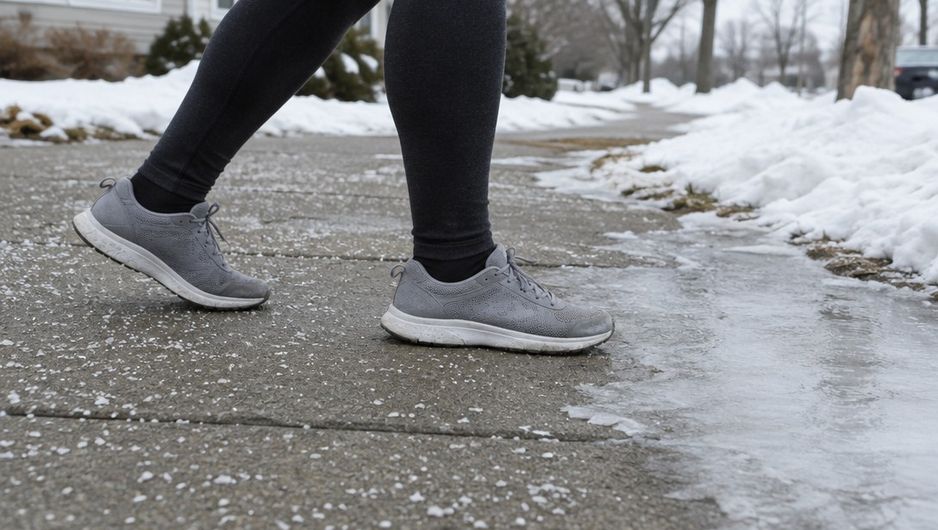
In many places, ice on the sidewalk is a bigger everyday risk than the temperature.
A few habits keep the footing in your favor:
- Pick routes that are plowed, salted or well used.
- Shorten your stride on slick stretches, close to how you would walk across ice.
- Treat any shiny patch as ice until you know it isn’t.
Winter days are short, so many runs end up before sunrise or after dark. Wear something bright or reflective, and stick to streets with lights.
Change the run, not just the clothes

What you wear matters, and the short answer on what to wear running in the cold is thin layers you can open or take off. You don’t need special winter gear to start.
The run itself can change too:
- Warm up indoors for a few minutes. March in place or climb the stairs, so the first cold mile isn’t also your warm-up.
- Head out into the wind. The wind then hits your face on the way out, while you’re still dry. On the way home, sweaty and tired, you have it behind you.
- Stay close to home on the coldest days. Short loops let you stop early without a long, cold walk back.
- Change out of damp clothes soon after. Sweat cools fast once you stop moving.
Your hands may sting early in the run and often warm up once you’re moving.
When to take it indoors
Some days a different workout is the better choice. Move the run, or skip it, when any of these is true:
- The wind chill is low enough for exposed skin to freeze in 30 minutes.
- The sidewalks are covered with ice you can’t avoid.
- The only route you have is dark and has no sidewalk.
A treadmill, a brisk walk or a rest day all count. Even a short indoor session keeps a running habit alive through a cold week.
In a mild climate, the early dark is usually the main change. If your winters are hard, check the wind chill the night before, and plan the route to match.