
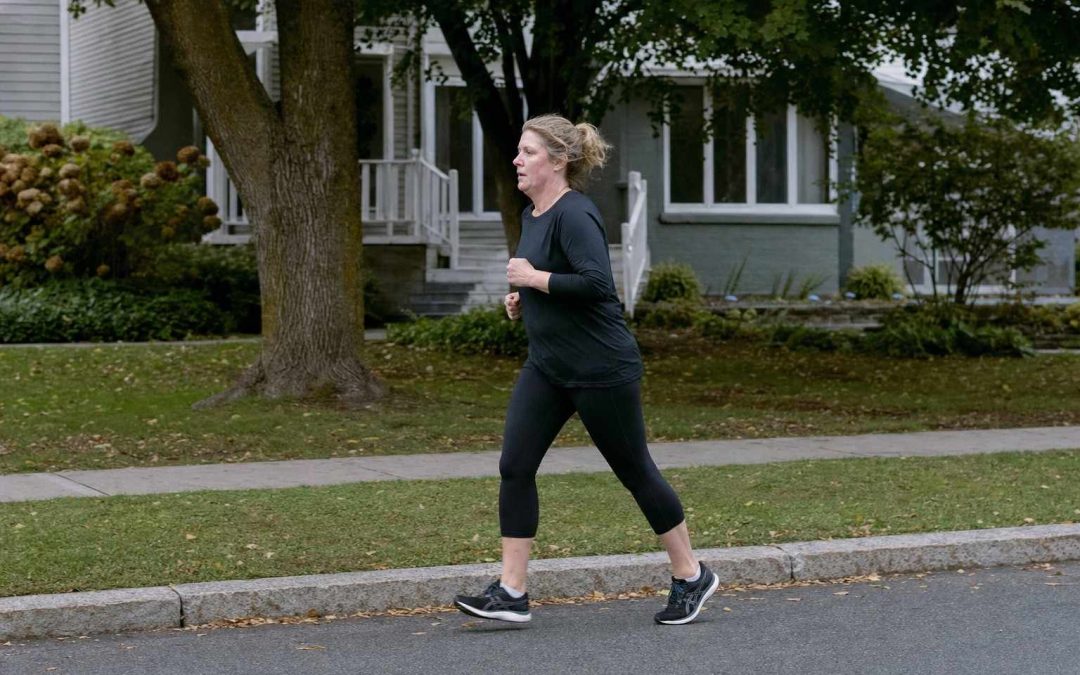
Here is a number that takes the pressure off: you probably need far less running than you think to get the big health payoff.
If “real running” in your head looks like an hour on the road five days a week, that picture stops a lot of people before they start. The research points somewhere much gentler.
Even a little running does a lot

A 2014 study in the Journal of the American College of Cardiology tracked a large group of adults over many years. Its title is about as blunt as research gets: leisure-time running reduces all-cause and cardiovascular mortality risk.
What stands out is how little it took. The benefit turned up even among people running fairly modest amounts at an easy pace, not just dedicated high-mileage runners.
You do not have to be fast or go far. Showing up regularly is what moves the needle.
In plain terms, most of the reward is on the table for ordinary runners doing ordinary amounts. Consistency beats any single heroic effort.
More is not always better
If a little helps, surely more must help in proportion? Not quite, and that turns out to be freeing.
A 2020 review in the British Journal of Sports Medicine pooled data from many studies and asked that exact question in its title: is the more the better?
Any amount of running was linked to a lower risk of dying from any cause, but the benefit did not keep climbing in a straight line as the miles went up.
According to that review, the step from nothing to something is where most of the payoff lives. Going from a lot to a great deal more adds little.
That is good news for anyone short on time. You are not falling behind by keeping things modest.
What the official guidance actually asks for

If you want a concrete target, the national guidance is more reachable than most people expect.
The Physical Activity Guidelines for Americans recommend at least 150 minutes of moderate activity a week, or 75 minutes of vigorous activity. Running counts as vigorous.
That 75 minutes covers the whole week, not a single session. Three 25 minute runs get you there. So does a handful of shorter ones.
The Centers for Disease Control and Prevention frames it the same way, and is clear that any amount above zero helps, even before you reach the full target.
Why “just enough” beats “all out”
Here is the trap most beginners fall into. They take on the schedule of a marathoner, feel exhausted and sore, and quit inside a month, deciding running is not for them.
The problem was never running. It was the dose.
The best run is the one you actually do, most weeks. A modest amount you can keep up beats an ambitious plan that flattens you in two weeks.
So keep the first month’s efforts short and easy, and let consistency rather than intensity do the work.
A realistic starting point
You do not need much to begin.
- Aim for three short sessions a week. Twenty to thirty minutes each is plenty.
- Mix running and walking. One minute running, two walking, repeated, makes a fine first session.
- Keep the running slow enough to talk.
- Stop while you still feel you could have done a touch more.
No special gear required, either. A free timer on your phone is enough to start.
If you later decide you want to track your runs, you can compare basic running watches on Amazon, but treat it as a nice-to-have, not a requirement.
The takeaway
The minimum effective dose of running is smaller than the culture around it suggests. The research is consistent: modest, regular running carries most of the health reward, and stacking on extra miles adds surprisingly little.
So when time or energy is short, do the small version. It counts for far more than skipping it, and it is the version you will still be doing a year from now.
When you want a week-by-week structure, here is how to start running in your first month. And if motivation is the real sticking point, building a running habit that sticks is a good next read.