

One July morning a few years back I figured nine a.m. was early enough to avoid the heat. It was already close to ninety out.
By the third mile my normal easy pace had turned into a slow shuffle, and I finished soaked through and a little annoyed at myself.
Nobody was timing me. I just picked the wrong hour.
That is really the whole lesson of running through a heat wave: it is less about pushing through and more about choosing your hour.
The fix is not toughness. It is picking the right hour to run.
Run at the coolest part of the day
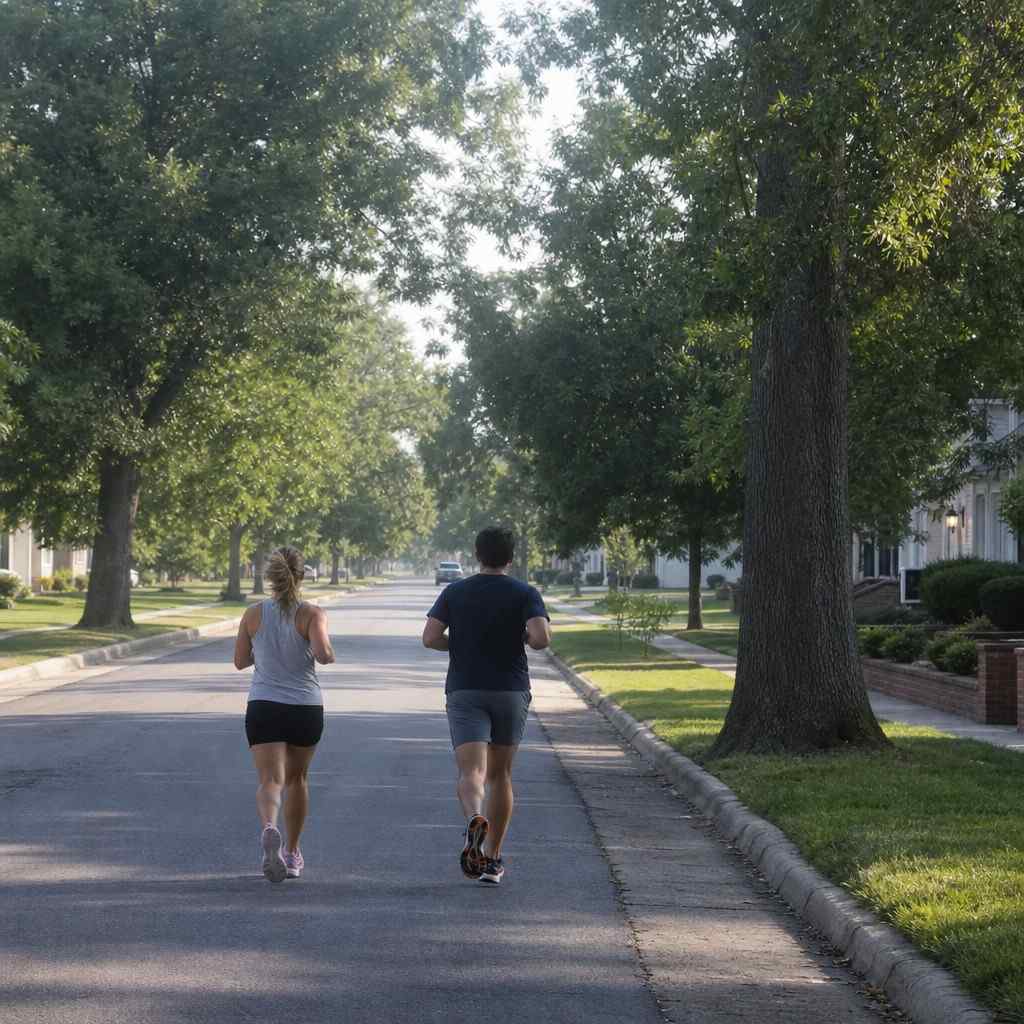
The single biggest lever you have is timing.
Early morning, before the sun is properly up, is almost always cooler than anything later.
Late evening can work too, once the pavement has stopped radiating the day’s heat back at you.
If you only change one thing this week, change your start time.
The CDC is the United States government’s health protection agency, and its guidance on extreme heat is straightforward on this point.
Plan outdoor activity for the coolest parts of the day and stay in the shade when you can.
That is not a suggestion for serious athletes only.
It applies just as much to someone doing a slow three miles around the block.
If you can only run midday because of work or family schedules, treat that run as a shorter, gentler one on purpose.
Save the longer effort for a cooler day.
Let your pace drop, and let it
Heat makes your heart work harder at the exact same pace, because your body is also busy trying to cool itself down.
That means the pace that felt easy in April can feel like a push in July, even though nothing about your fitness has changed.
Keep your easy runs slow enough to hold a conversation. That rule does not pause for a heat wave.
If holding a conversation now means running noticeably slower than last month, that is the heat, not a step backward in your training.
Walk breaks are a completely reasonable answer here too.
Plenty of people run a normal ten minute mile in cool weather.
Plenty of them are happy to run walk their way through a ninety degree afternoon instead.
Build a hydration habit before you head out
Waiting until you feel thirsty on a hot run puts you behind before you have even started fixing it.
The better habit is steady fluids through the day, not a single big drink right before you lace up.
Sip water through the whole day so you start already well hydrated, not catching up.
The CDC says the same: drink plenty of fluids and carry a water bottle with you.
On a longer or hotter run, that means an actual bottle in your hand or a belt.
Not a hope that you will pass a fountain.
For the daily habits that make this easier, how to stay hydrated on your runs covers the basics in more detail.
Choose routes with shade and a bailout option
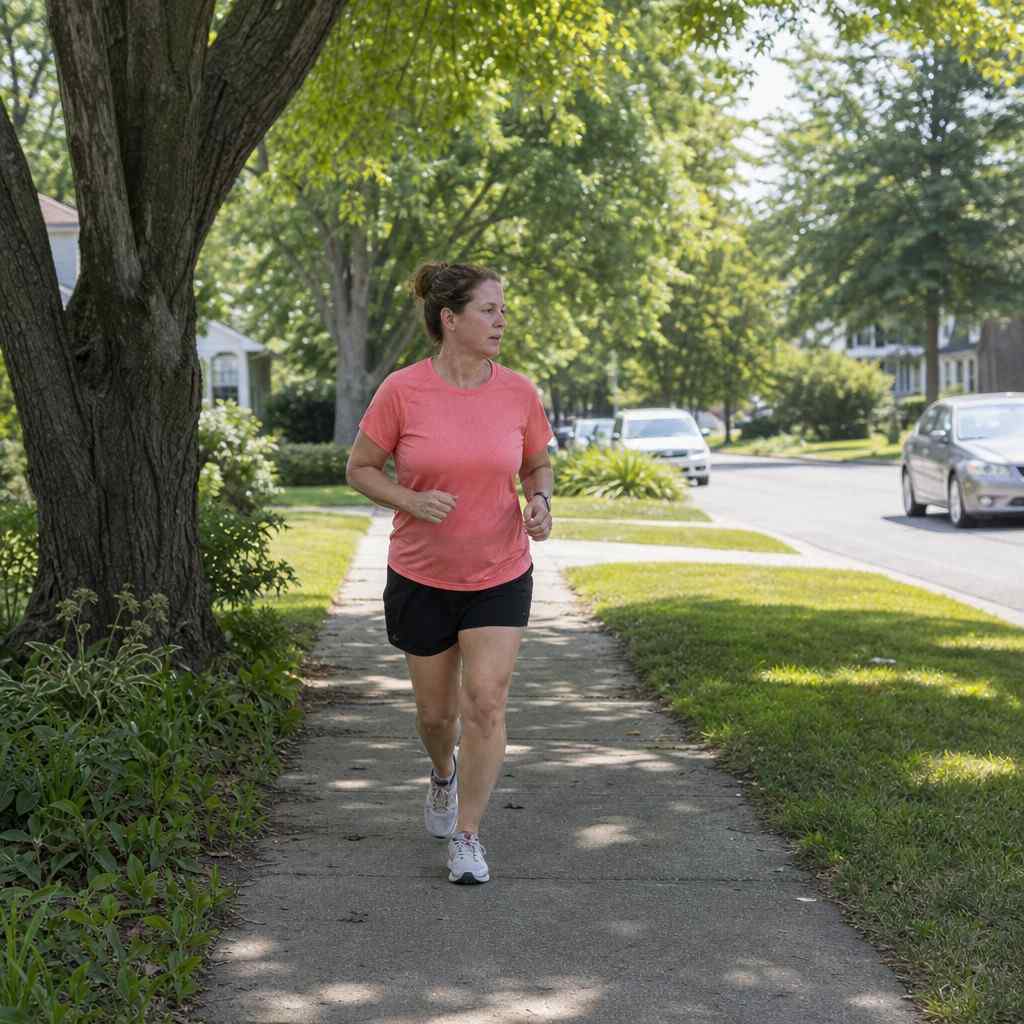
A tree lined path or a loop near your own front door beats a wide open route with no cover, especially past midmorning.
Shade can make a noticeable difference in how a run actually feels, even when the air temperature reading is identical.
It also helps to run somewhere you can cut a route short without much trouble.
A heat wave is exactly the wrong week to commit to an out and back that only ends one way.
Light, breathable clothing helps too.
If you want the basics on that, what to wear running covers that without turning it into a shopping list.
A shaded loop with an easy way home beats a scenic route you cannot cut short.
Know the warning signs, and actually stop for them
Most hot runs are just uncomfortable, not dangerous.
But it is worth knowing where the line is.
A few signs mean stop, walk, find shade, and drink something:
- Feeling unusually dizzy or nauseous
- A pounding headache mid run
If you stop sweating while you are still clearly overheated, that is a bigger flag, not a smaller one.
I use the same rule for heat that I use for pain.
A heat symptom that comes on sharp and specific, like sudden dizziness, gets the same treatment.
Stop now, sort it out, do not try to run through it to the end of the block.
The CDC also notes that heat can affect anyone, but a heart condition or other chronic illness raises the risk.
If that describes you, this genuinely is not a week for pushing through.
Check with your doctor about safe limits before you push through a run in serious heat.
The plain version
A heat wave is a few uncomfortable weeks, not a reason to stop running.
I still run through them every summer.
I just get out the door a lot earlier than I used to.
And I do not feel bad about walking a block when the sun gets too strong.